Aqua superPower and Lamanage Huchet Desmars Partner to Launch France’s First Fully Electric Mooring Boat
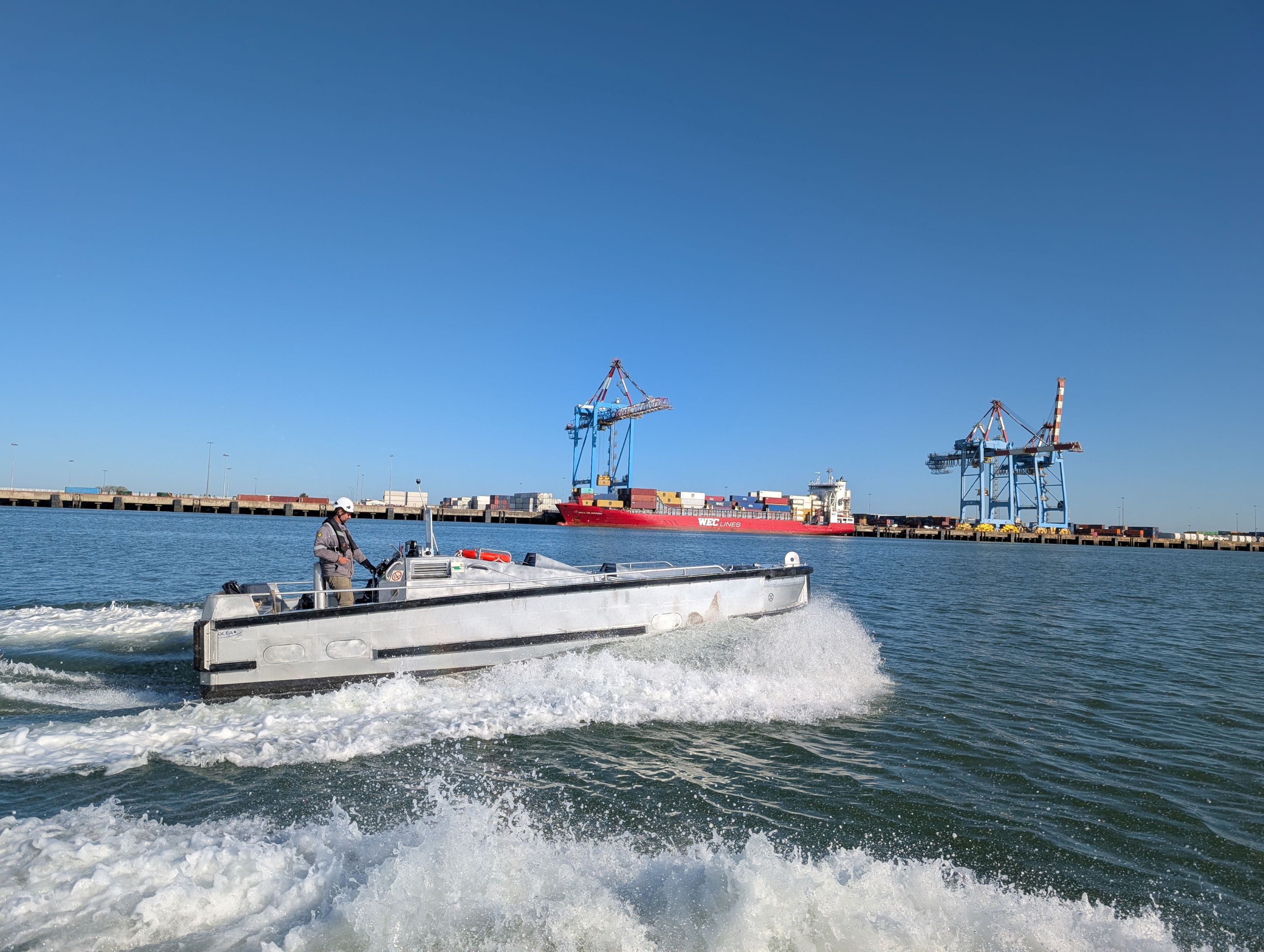
Nantes, France, 16 November 2026 – Lamanage Huchet Desmars – Groupe LHD and Aqua superPower have joined forces to introduce France’s first fully electric mooring boat to be officially registered with the French Maritime Affairs authority, marking a significant milestone in the transition towards zero-emission port operations. Under the partnership, Aqua superPower will supply the high-power marine charging equipment and manage the shore-side charging infrastructure, providing the reliable, efficient and scalable charging capability needed to support the vessel’s operation throughout its service life.
The project is being developed in collaboration with regional partners VEBRAT, OCEA, and 3MO, all based in the Pays de la Loire region. It is supported by European funding through the ERDF REACT-EU programme and subsequent ERDF initiatives aligned with the partnership between the Pays de la Loire region and the European Union. The ERDF thus provided more than 50 per cent of the funding for the research and development of the prototype electric propulsion system and the associated energy storage and management solution required for installation in the prototype mooring vessel built by OCEA for LHD.
The programme is also receiving substantial support from the CMA-CGM C Fund, administered by Bpifrance, for the construction, testing and fine-tuning of the mooring boat as well as the Aqua superPower charging solution.
This fully electric mooring boat is set to transform port operations by significantly reducing emissions and enabling sustainable, zero-emission maritime services. Powered by an advanced 300+ kWh battery system developed by VEBRAT and certified by Bureau Veritas, the vessel is designed to operate for extended periods on a single charge while maintaining high performance. With a top speed of 12 knots, it can reach worksites more than 30 miles away, even in demanding sea and weather conditions.
Aqua superPower’s marinised charging infrastructure will deliver the high-power energy required to support continuous operations, acting as a key enabler for the transition to electric workboats. The Port of Nantes Saint-Nazaire is supporting the project through investment in grid infrastructure, including the installation of a transformer to power Aqua’s 400 kW marine fast charging system.
Initial demonstrations will take place at the upstream barge in Donges, followed by deployment in Nantes, with future expansion planned for Montoir-de-Bretagne. The long-term vision includes wider rollout across French and European ports, enabling the adoption of electric mooring vessels at scale.
“We are thrilled to be leading this innovative project in partnership with Aqua superPower,” said Jean-Luc Desmars, President of Lamanage Huchet Desmars – Groupe LHD and Président du Syndicat Professionnel du Lamanage Manche, Mer du Nord, Atlantique. “This electric mooring boat represents the future of port services and exemplifies our commitment to transitioning to more environmentally responsible operations. With the expertise of Aqua superPower, we’re ensuring that our vessels not only meet current environmental regulations but exceed them.”
“Our partnership with LHD and VEBRAT is a significant milestone in the electrification of commercial marine operations,” said Karen Gill, COO of Aqua superPower. “By supplying, operating, and managing the charging infrastructure, we are delivering a fully integrated solution that enables ports to transition confidently to zero-emission vessel operations.”
The prototype vessel has begun a six-month operational test programme in spring 2026. This phase made it possible to validate performance, optimise operations, and demonstrate the real-world capabilities of fully electric port services. OCEA is now carrying out the final minor modifications to it, following this test programme.
With plans to scale production over the coming years, the project is expected to accelerate adoption of electric workboats across the maritime sector, setting a new benchmark for sustainable port operations.